What we've been getting wrong about AI's truth crisis
AI accuracy concerns are often misunderstood.
The MIT Technology Review article "What we've been getting wrong about AI's truth crisis" challenges common assumptions about how and why AI produces incorrect or misleading outputs. It highlights where risks actually originate and why clarity matters when evaluating AI systems.
Read the article to gain a clearer view of AI reliability and what it means for real-world use.
What is the current “AI truth crisis” and why does it matter?
The current AI truth crisis refers to a growing gap between what’s real and what people believe, driven by AI-generated and AI-edited content that can be hard to distinguish from authentic material.
The article highlights several dynamics:
- Government use of AI content: The US Department of Homeland Security has been confirmed to use AI video generators from Google and Adobe in content shared with the public, including in the context of President Trump’s mass deportation agenda.
- Politicized imagery: The White House posted a digitally altered photo of a woman arrested at an ICE protest, making her appear more hysterical and emotional. Officials did not clarify whether the manipulation was intentional.
- Media missteps: A news network (MS Now, formerly MSNBC) aired an AI-edited image of Alex Pretti that made him look more attractive, later stating it did not realize the image had been altered.
These examples show that AI isn’t just creating confusion about what’s real. It’s also being used in emotionally charged political and news contexts, where even small edits can influence how people interpret events. The concern is less about isolated fakes and more about a broader environment where trust in institutions, media, and even visual evidence is steadily eroded.
Why aren’t content labels and authenticity tools solving the problem?
Content authenticity tools were designed around a simple idea: if we can label what’s AI-generated or edited, people can make better decisions about what to trust. In practice, the article explains several reasons these tools are underperforming:
1. **Partial and inconsistent labeling**
- Adobe’s Content Authenticity Initiative only applies automatic labels when content is fully AI-generated.
- For mixed or lightly edited content, labels are opt-in, meaning creators must choose to disclose AI use.
2. **Platform behavior can undermine labels**
- Platforms like X (formerly Twitter) can strip labels from content.
- Even when labels exist, platforms may choose not to display them prominently.
- In the case of the altered White House arrest photo, a note about manipulation was added by users, not by an automated authenticity system.
3. **Exposure doesn’t neutralize influence**
- A study in *Communications Psychology* found that when participants watched a deepfake confession and were later told explicitly that it was fake, they still relied on it when judging the person’s guilt.
- In other words, even when people know content is fake, it continues to shape their judgments.
The net effect: transparency tools help, but they don’t reset people’s beliefs once an emotionally powerful image or video has landed. The original content still influences perception, even after it’s debunked. That’s why the article argues we need to rethink our strategy, not just refine labeling technology.
How is AI changing the nature of trust and disinformation?
AI is reshaping trust and disinformation in a few important ways highlighted in the article:
1. **Influence persists even after exposure**
- The deepfake study in *Communications Psychology* shows that people continue to be swayed by fake content even after they’re told it’s fake.
- This means that simply “exposing the lie” or adding a correction does not fully undo the impact of manipulated content.
2. **Doubt is becoming a strategic tool**
- As AI-generated and edited content becomes more common, it’s easier for actors to cast doubt on authentic evidence by claiming it might be fake.
- This doesn’t just create confusion; it can be used to undermine legitimate reporting, investigations, or criticism.
3. **The problem is broader than confusion**
- Early warnings about AI focused on the risk that people wouldn’t be able to tell what’s real.
- The article argues we’re actually entering a world where:
- Influence survives exposure (fake content still shapes beliefs after being debunked).
- Doubt can be weaponized against real evidence.
- Establishing the factual truth no longer automatically restores trust.
4. **Implications for organizations**
- Relying only on fact-checking and authenticity labels is no longer enough.
- Organizations need a broader approach that anticipates how emotionally charged AI content will circulate, how corrections will be received, and how trust is built (or lost) over time.
In short, AI is forcing institutions, media, and policymakers to reimagine their playbook: from focusing solely on verifying facts to also managing how narratives, emotions, and trust evolve in an environment where manipulated content is cheap, fast, and persistent.
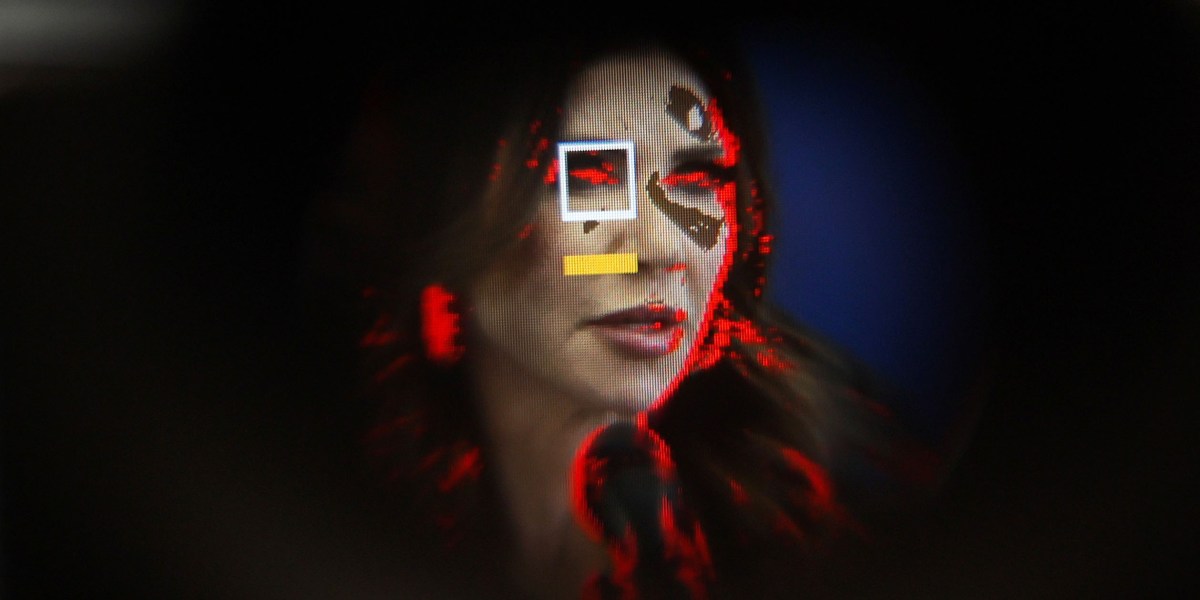
What we've been getting wrong about AI's truth crisis
published by M4siz Limited
We are approaching our 25th anniversary in IT development and support services from our office in Essex, England.
We provide cost-effective software development and support services to deliver products that power your business needs and objectives. We have already built image analysis systems, cloud, and web services infrastructures so that you can be effective locally and globally using digital communication and management tools.
Our team has a range of ways to provide innovative solutions for your business that allows you the opportunity to re-imagine your products and services embracing the opportunities and protecting against the threats posed by our digital world.
Our focus is your business so that we understand how best to provide innovative solutions that grow with your business. Our platforms work across technology and we avoid building in solutions where you only have one provider or solution.
We hope the information on our website and micro-site prompts your interest in finding out more about our solutions and how we may be able to help you build cost-effective solutions.





 Sign in with LinkedIn